
Become a Fashion Designer. From your first sketch to a pitchable collection.
Idea to Collection is the end-to-end fashion design education that takes you from blank page to costed, pitchable line covering sketching, 3D sampling, trend research, AI tools, fabric spec, and production fundamentals, with zero romantic nonsense about how it works.
"The skills are learnable. Every step of it. And I'm not going to pretend otherwise just to make it seem more magical."
— Jennifer Xue, Lead Fashion Course Developer
What you'll learn
What you'll be able to do
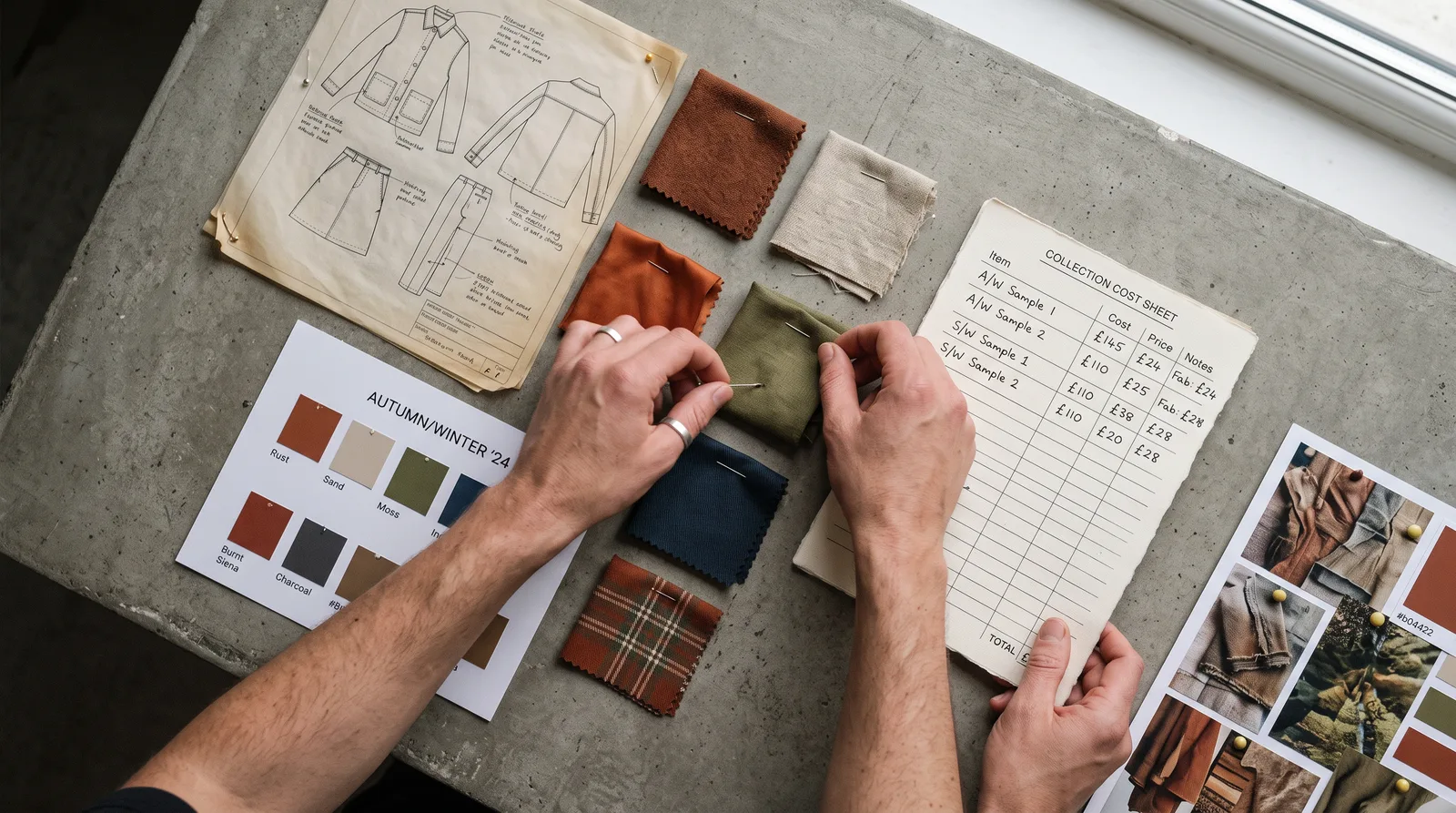
- Build and present a cohesive fashion collection from initial brief to styled, costed line plan ready to pitch to buyers or producers.
- Sketch professional technical flats and croquis by hand and digitally in Procreate, Illustrator, and Photoshop.
- Use AI design tools (Midjourney, Adobe Firefly, Raspberry AI) to generate, refine, and own concept visuals that carry your creative signature.
- Simulate and fit garments in CLO 3D or Browzwear, reducing physical sample rounds with accurate 3D prototypes.
- Read trend data from WGSN, Heuritech, and Trendalytics and translate it into a sharp, differentiated brand brief.
- Specify fabrics, trims, colorways, and construction details with enough technical fluency to communicate directly with pattern makers and factories.
How it works
A school that adapts to you
This isn't a set of static videos. Every lesson is generated live and tuned to where you actually are.
We learn your level
A quick placement check tailors your starting point so you're never bored or lost.
Lessons adapt as you go
Each lesson is written for your pace and your goal, adjusting as your skills grow.
Your AI coach keeps you moving
Checkpoints, feedback, and gentle nudges turn progress into a real result.
The curriculum
What's inside your school
12 modules · 48 lessons

Inside the Fashion Design Profession
Myth busted: "Designers spend their days sketching beautiful dresses."
- 1.1What a Fashion Designer Actually DoesIncluded
- 1.2Myths vs. Realities of the ProfessionIncluded
- 1.3The Fashion Industry MapIncluded
- 1.4How AI Is Changing the Designer's JobIncluded
Design Fundamentals & Fashion Literacy
Myth busted: "You have to be born with an eye for style."
- 2.1Elements & Principles of Design in ClothingIncluded
- 2.2Fashion History as a Design ToolkitIncluded
- 2.3Garment VocabularyIncluded
- 2.4Inspiration & Mood BoardsIncluded
Trend Research & Knowing Your Customer
Trains students to read real trend data, understand their target customer, and crystallize research into a focused design brief.
- 3.1Who Are You Designing For?Included
- 3.2How Trends Really Form and SpreadIncluded
- 3.3AI Trend Forecasting ToolsIncluded
- 3.4Brand DNA & the Design BriefIncluded
Sketching & Fashion Illustration
Develops hand and digital drawing skills — from the fashion figure to polished, factory-ready flats.
- 4.1Figure Proportions & the CroquisIncluded
- 4.2Technical FlatsIncluded
- 4.3Digital IllustrationIncluded
- 4.4Rendering Fabric, Color & PrintIncluded
AI-Powered Concept Design
Teaches students to use AI image tools as a creative instrument while keeping their own design signature intact.
- 5.1Prompting for FashionIncluded
- 5.2Sketch-to-Design & Text-to-DesignIncluded
- 5.3Refining, Iterating & Protecting Your SignatureIncluded
- 5.4Ethics & Originality in AI DesignIncluded
Fabrics, Materials & Color
Gives students the technical material fluency to specify fabric, color, and trims with confidence.
- 6.1Fiber & Fabric FundamentalsIncluded
- 6.2Choosing Fabric for Design IntentIncluded
- 6.3Color Theory, Palettes & PrintsIncluded
- 6.4Trims, Findings & DetailsIncluded
Pattern Making & Garment Construction
Equips students with enough pattern and construction knowledge to communicate effectively with pattern makers and factories.
- 7.1Measurements, Sizing & Fit BasicsIncluded
- 7.2Flat Pattern FundamentalsIncluded
- 7.3Construction & Sewing FundamentalsIncluded
- 7.4Draping, Fit Sessions & Fixing Fit ProblemsIncluded
3D & Digital Garment Design
Teaches students to build, simulate, and present garments in 3D software to reduce costly physical sample rounds.
- 8.1Intro to 3D Fashion SoftwareIncluded
- 8.2Building & Simulating a Garment in 3DIncluded
- 8.3Virtual Sampling & FitIncluded
- 8.4Digital PresentationIncluded
Building a Collection
Guides students through planning, designing, and costing a coherent capsule collection ready to pitch.
- 9.1Line Planning & Collection ArchitectureIncluded
- 9.2Designing a Cohesive CapsuleIncluded
- 9.3Costing, Pricing & the Line SheetIncluded
- 9.4Sourcing & Production FundamentalsIncluded
Sustainability, Ethics & the Future of Fashion
Embeds responsible design thinking and equips students to make credible sustainability decisions.
- 10.1The Environmental Cost of FashionIncluded
- 10.2Sustainable Materials & Circular DesignIncluded
- 10.3Ethical Production & Supply Chain TransparencyIncluded
- 10.4Communicating Sustainability Without GreenwashingIncluded
Portfolio, Brand Identity & Career Launch
Turns course work into a professional portfolio and gives students a concrete plan to enter the industry.
- 11.1Editing & Curating Your PortfolioIncluded
- 11.2Digital Portfolio & Personal BrandIncluded
- 11.3Industry Pathways & Job Search StrategyIncluded
- 11.4Pitching Your CollectionIncluded
Tech Packs, Sourcing & Production
- 12.1The Tech PackIncluded
- 12.2Sourcing Fabrics, Trims & ManufacturersIncluded
- 12.3Sampling Rounds & Quality ControlIncluded
- 12.4Production Planning & Factory CommunicationIncluded
Who it's for
Is this you?
The self-taught creative
She's been making clothes and filling sketchbooks for years but has no industry framework as this course gives her the professional structure to match her passion.

The career-changer
He has transferable skills from another field and a clear vision, but needs a rigorous, soup-to-nuts fashion education that doesn't waste his time on fluff.

The fashion student
Her program covers design theory but skips 3D software, AI tools, and real production costing. She's here to fill the gaps her tuition didn't.

The emerging brand founder
He's already selling pieces but designing by instinct. This course helps him build a proper collection process, brief, and line plan so he can pitch to wholesale buyers.

The technical professional going creative
She works in apparel sourcing or production and understands the supply chain. Now she wants to cross over into design and needs the creative and sketching skills to do it.

The portfolio rebuilder
She trained years ago but her portfolio is dated and her digital and AI skills are nonexistent . This course is her fast, complete reboot for a serious return to the industry.
Questions
Frequently asked
Jennifer Xue of StyleCareer.com
A note from your teacher

Jennifer Xue of StyleCareer.com
If you've ever Googled "how to become a fashion designer" and come away more confused than when you started. I made this course for you.
The fashion industry is genuinely bad at explaining itself. Advice skews toward either the fantasy version (follow your passion, intern at a big house, get discovered) or the gatekept version (you need a degree from the right school, you need the right connections, you need years of experience before you're allowed to have opinions). Neither version helps someone who just wants to understand the actual job and learn to do it well.
Here's what I know to be true: fashion design is a craft with a learnable process. Concept to brief. Brief to sketch. Sketch to spec. Spec to sample. Sample to collection. Line plan to production. Every step has tools, methods, and professional standards and none of them require a mysterious natural gift. What they require is clear instruction and serious practice, which is exactly what this course provides.
I built Idea to Collection to cover the complete pipeline without skipping the uncomfortable parts. That means pattern making fundamentals and fit correction, not just pretty mood boards. It means costing and line sheets, not just editorial shoots. It means learning to use AI tools like Midjourney, Firefly, and Raspberry AI with creative integrity, understanding what they're good for, where they fall short, and how to keep your own design voice front and center. It means reading trend platforms like WGSN or Heuritech and translating that data into decisions, not just vibes. And it means 3D simulation in CLO 3D or Browzwear, because the industry has moved there and you should know how it works.
I also built in the section I wish had existed when I was starting out: the honest one about what the profession actually looks like. The industry map. The different pathways: in-house, freelance, brand-building, production-side. What hiring managers actually look at. How to pitch a collection without performing confidence you don't have yet.
You don't need a natural talent. You need a complete education. This is it. Come build something real.
— Jennifer Xue of StyleCareer.com
Start your journey today
Get instant access — learn at your own pace with an AI coach in your corner.
$39/mo
Recurring billing · cancel anytime
Secure checkout · Instant access
- 12 modules, 48 lessons
- AI-adaptive lessons tuned to your level
- Quizzes & checkpoints to lock in progress
- Your own AI learning coach
- Learn on any device, at your pace
- Full access for as long as you're subscribed